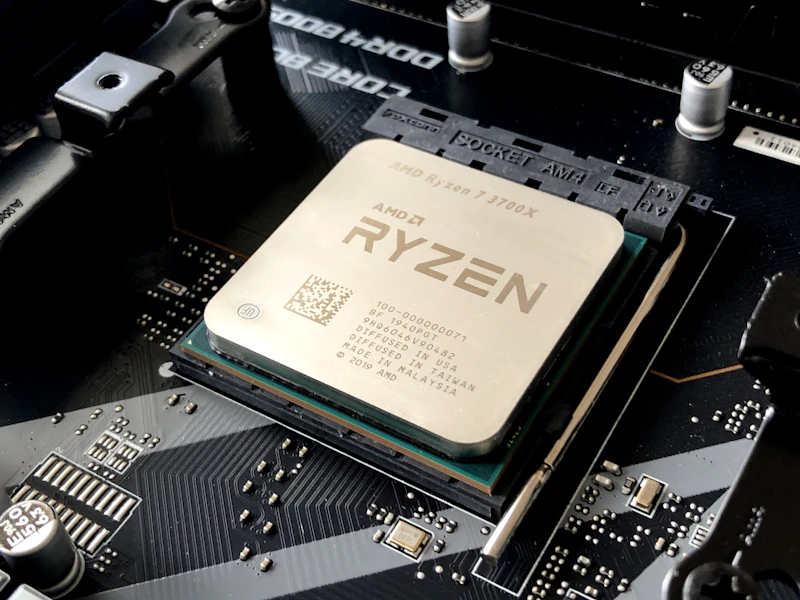
AMD launches Ryzen AI 400 Series: Local AI reaches its peak
Review/Launch: Ryzen AI 400 Series — The Supremacy of Local Inference
Introduction + Context
The era of needing to send any and all data to the cloud under the promise of running everyday computational intelligence tasks is over. AMD has just launched the Ryzen AI 400 Series line for laptops and their Turin equivalents for local datacenters, solidifying the "AI PC" concept.
Aimed directly at the consumer market focused on productivity and privacy, these chips guarantee a formidable Neural Processing Unit (NPU).
Specifications and Focus
With a brutal leap in performance per watt, the NPUs of the 400 line easily surpass the tens of TOPS (Tera Operations per Second) mark. Unlike in the past, today it is possible to:
- Run Medium Language Models (7B to 14B) in local RAM at instant conversational speeds.
- Do heavy offline text/video generation edits (via the Ryzen AI Halo platform for developers).
- Integrate real-time context translation and bouncing without consuming CPU or general battery, delegating predictions strictly to the NPUs.
Market Impact and Strengths
AMD targets a sensitive moment: distrust regarding subscriptions and sending data to Cloud servers.
Strength: Its overwhelming capability in light machines (Ultrabooks and development stations) cheapens the process for companies and pushes Microsoft to increasingly optimize Windows Copilot and other local native intelligences.
Alternative Perspectives
While Qualcomm dominated previous headlines on the ARM side and Intel has been chasing this lead for some time with its Meteor Lake chips, the 400 series has the challenge of convincing developers to port their software using the OpenVINO/ONNX stacks optimized for AMD's x86 architecture.
Final Verdict / Conclusion
The Ryzen AI 400 is undoubtedly the fuse of a second revolution regarding edge hardware. Autonomous development tools (like the Rebeka framework itself and Multi-Agent orchestrators) can be deployed directly into common notebooks at a speed that previously required servers and massive dedicated Graphics Cards (GPUs).
Sources and References
- AMD Keynote and Product Announcements — March 2026.
- PC World Hardware Reviews — The era of NPU dominance. Accessed on March 18, 2026.